

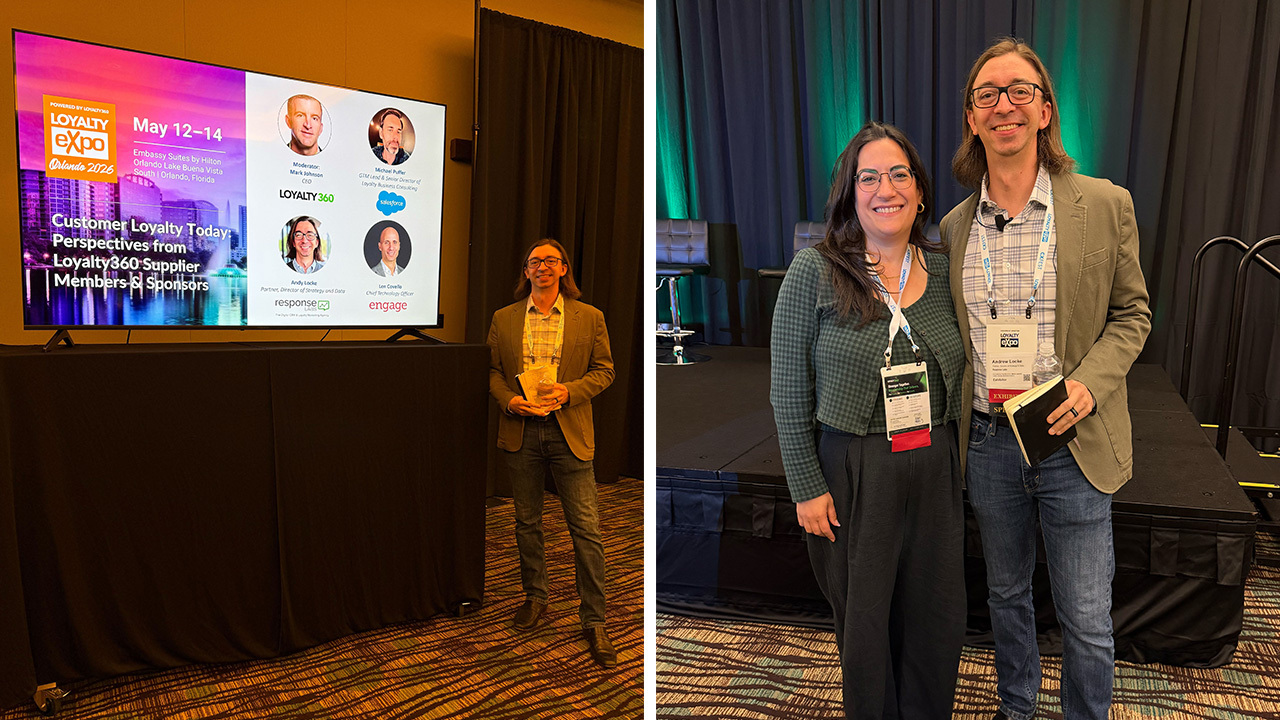
Last week, our team headed to Orlando for the Loyalty360 Expo — a gathering of loyalty, CRM, customer experience, and marketing leaders all focused on one question: what does modern loyalty actually look like in today’s market?
Between panel discussions, client conversations, product demos, and plenty of hallway discussions, one thing became very clear: loyalty programs are no longer just about points and discounts. The brands winning loyalty today are the ones connecting strategy, operations, customer experience, and data execution into one cohesive system.
Here’s a recap of the biggest themes and takeaways from our time at the conference.
Loyalty Matters More During Economic Uncertainty
One of the strongest themes throughout the conference was the growing importance of loyalty during economic pressure – especially today.
As consumers become more price-conscious, brands — especially premium brands — face increasing pressure to prove their value beyond pricing alone. While discounts and offers still matter, many conversations centered around the idea that customer experience is now the true differentiator.
Customers are asking three things from brands today:
- Help me save money
- Help me save time
- Don’t ask me to do too much!
The companies succeeding in loyalty are the ones using customer data to understand those needs and deliver experiences that feel relevant, timely, and valuable.
At the same time, brands are facing more competition than ever for customer attention. Nearly every company now has some form of loyalty initiative designed to capture first-party data and deepen customer relationships. That means simply having a loyalty program is no longer enough — brands must create experiences customers genuinely want to engage with, and programs that easily and quickly provide real value.
Loyalty Has to Be Bigger Than Discounts – Experience Matters
Another major discussion point: loyalty cannot operate as just an “offer engine.”
Yes, incentives and rewards can drive behavior. But long-term loyalty comes from the complete customer experience — from digital interactions all the way down to front-of-house employee engagement.
One example that came up repeatedly was the importance of store associates and customer-facing employees understanding the loyalty experience themselves. Some organizations are even building internal employee reward programs that mirror customer programs (with even more perks!), helping associates become advocates who can confidently explain and promote their real experience maximizing loyalty benefits.
That operational alignment matters.
You can have excellent CRM campaigns, strong targeting, and high-performing offers — but if the in-store or customer experience breaks down, loyalty suffers quickly.
True loyalty is created when…
- Marketing
- Operations
- Customer experience
- Analytics
- Technology
- Customer-facing employees
…are all aligned around the same customer experience strategy.
Proving Loyalty Value to the C-Suite Is Still a Challenge
A recurring topic throughout the conference was the difficulty in measuring success of your loyalty program.
Loyalty teams often struggle to communicate the full business impact of their programs because they operate in a world of incrementality. A 5–10% lift may not seem dramatic when compared against total company revenue, but the long-term value of retaining and growing existing customers is enormous.
The conversation has shifted beyond just campaign performance metrics toward broader business impact:
- Increased customer lifetime value
- Greater share of wallet
- Reduced acquisition costs
- Improved retention
- Higher profitability
The brands making the strongest case internally are the ones connecting loyalty performance directly to measurable business outcomes. Especially during uncertain economic periods, the value of loyal returning customers becomes even more visible to the C Suite.
AI Is Everywhere — But Execution Is Still the Gap
Unsurprisingly, AI was the hot-button topic at the conference this year.
But interestingly, most conversations weren’t focused around the fear of teams being replaced. Instead, they focused on how AI can help organizations get more value from the technology they already own.
The bigger challenge many brands discussed wasn’t lack of ideas or lack of tools — it was operational execution.
There’s no shortage of strategy presentations, roadmaps, or martech platforms. The real challenge is:
- Getting campaigns launched efficiently
- Connecting fragmented systems
- Building usable audience segments
- Measuring results quickly
- Turning insights into the next action
In other words: getting the work done reliably and at scale. That execution gap came up repeatedly across conversations with loyalty, CRM, and marketing leaders.
Bringing Strategy and Execution Together with magpie
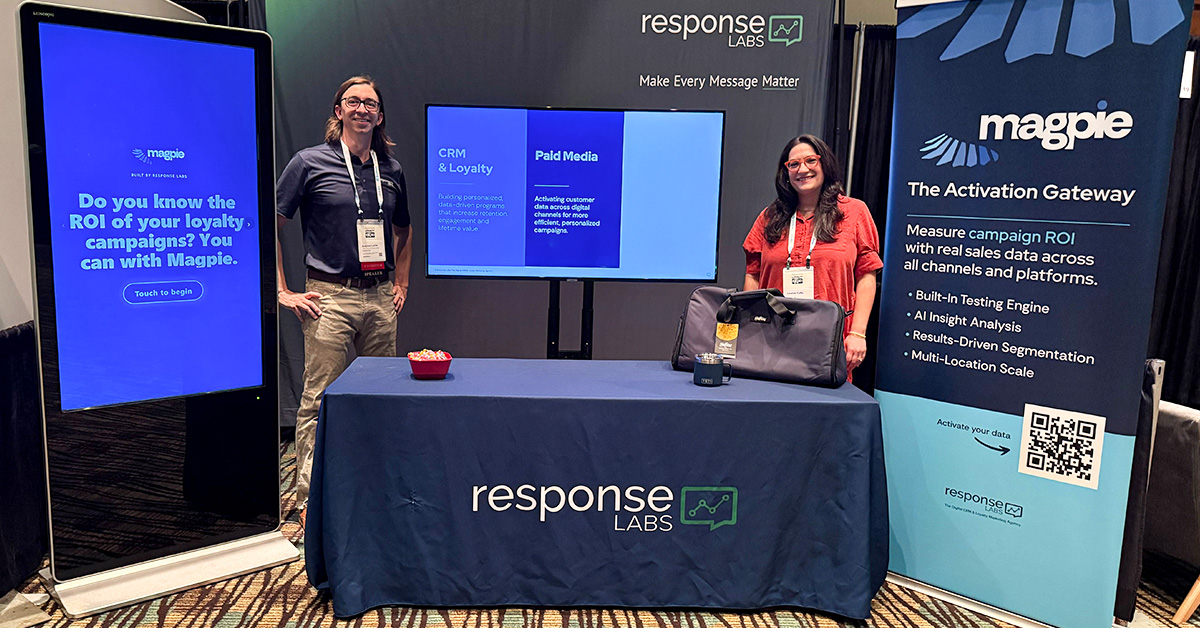
At our exhibitor booth, we had the opportunity to showcase magpie, our in-house intelligence and orchestration platform built to help marketers close the gap between strategy and execution.
magpie originated from a simple but common client problem – marketing teams often wait days or weeks to get campaign performance insights back from analytics teams, barring them from moving quickly with learnings onto the next test.
By integrating directly with existing martech ecosystems — including CDPs, ESPs, loyalty platforms, and transactional data sources — magpie helps teams:
- Build audience segments faster
- Automate test/control creation
- Surface hidden audience opportunities using AI
- Measure campaign lift quickly
- Track segment migration and customer movement
- Reduce operational friction between teams
magpie isn’t designed to replace existing platforms. Moreso, it acts as an intelligence layer that helps marketers activate and analyze campaigns more efficiently across the systems they already use.
The response at the conference reinforced something we hear often from clients: brands don’t necessarily need more tools — they need better orchestration.
The Biggest Takeaway: Loyalty Is an Enterprise Strategy
Perhaps the clearest takeaway from the week was this: Loyalty cannot sit in a silo.
The most successful loyalty programs are not owned solely by marketing teams. They are supported across the organization — from executive leadership to operations to customer-facing staff.
When loyalty becomes part of the broader business strategy, brands are able to:
- Deliver more consistent experiences
- Build stronger customer relationships
- Activate data more effectively
- Improve operational alignment
- Move faster from insight to execution
The conference reinforced what we see every day working with our clients: the brands that win are the ones capable of combining smart strategy with precise execution – our expertise.
Because ultimately, loyalty isn’t built through one campaign or one offer. It’s built through every interaction customers have with your brand.