AI & Innovation
AI Email Summaries: What Marketers Need to Know Now

The top inbox providers are now offering AI-generated email summaries to their customers, and despite some flaws in the generated information, more and more inbox providers are eyeing similar offerings to remain competitive in the inbox landscape.
Gmail, Apple Mail and Microsoft Outlook are offering AI-generated email summaries (AI summaries) to their customers as a way to help manage their evergrowing cache of unread email. Each provider is using their respective AI platform – Gemini, Apple Intelligence, and Copilot – to scan the content of an email and provide a summary that distills the information into quick bullets and action items for the customer. And while this summary mostly occurs after the user opens the email, Apple goes one step further and offers this summary before the user opens the email. Email professionals are right to be wary of how this shift impacts performance, but our research at Response Labs reveals that this evolution offers more opportunity than the initial reaction suggests.
Summary Comparison
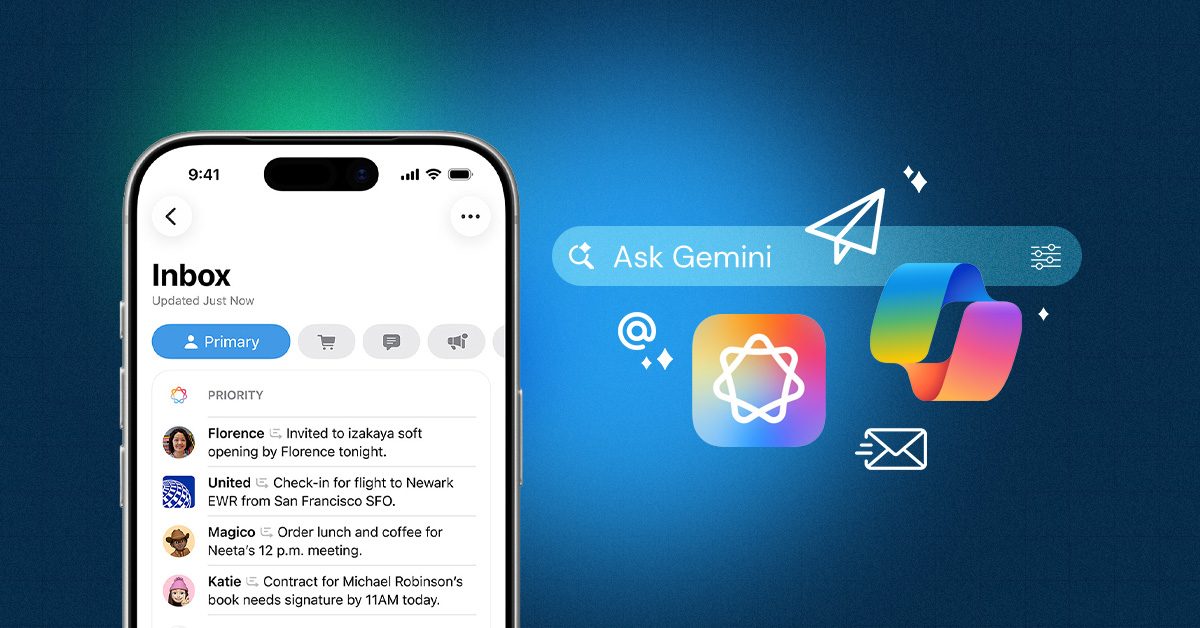
While the top three inbox providers are offering similar AI summaries, the actual execution between them is fairly different. Both Gemini and Copilot currently only offer post-open summaries, so a user has to open the email first before the summary appears, whereas Apple Intelligence offers both pre-open and post-open summaries. So, not only can a user get the summary after they open an email, Apple Intelligence also provides a single line summary before the user opens an email, right within the Inbox overview screen.
Despite the different delivery styles, there are similarities in how these summaries are built. Particularly, that all three tools focused on the first 150~200 characters of an email when pulling information for the summaries. Additionally, each summary responded well to semantic markup, so headings in <h> tags and copy in <p> tags helped each AI with content structuring.
AI Platform Comparison
Each AI platform behaves a little differently when performing the email scans. And thanks to our investigation, we were able to determine just how differently each platform behaves.
Google Gemini
Presently, AI Summaries are only available to users who have a paid subscription to Gmail (work or personal) and have the Gemini AI features enabled on their account. Once enabled, the only AI summary option currently offered is the post-open summary.
The post-open summary appears after a user opens an email. The summary is inserted at the top of the email, pushing the entire email content down, making the user scroll further to see the actual email.
However, Gemini does a full content scan of the email before generating the summary. It scans the text in images, live text, alt text and even emojis. This makes the Gemini summaries more accurate than their Apple Intelligence competitor.
Microsoft Copilot
Microsoft Copilot, like Google Gemini, only offers post-open AI summaries. They are, however, offered for free with the latest Microsoft Office Outlook and free accounts on Outlook.com.
As with the other post-open summaries, it appears after a user opens an email. However, a user must click on the ‘Summarize with Copilot’ button in the email window before the summary appears. Once clicked, the summary is inserted at the top of the email, pushing the entire email content down, making the user scroll further to see the actual email.
Copilot also does a full content scan of the email for generating the summary, using live text, image text and alt text to build it. The nice part about the Copilot summary is it may also include numbered citations that take the user to a corresponding content in the email when clicked.
Apple Intelligence
Apple’s AI summaries appear in the Apple Mail app only if a user has enabled Apple Intelligence on their device. Apple is the only platform that has both pre-open and post-open summary types.
The pre-open summary appears before a user opens their email. It replaces the preheader line in the inbox overview screen while the subject line remains. An icon with an arrow over two lines indicates that the text is actually the AI summary.
The post-open summary appears after a user opens an email. The summary is inserted at the top of the email, pushing the entire email content down, making the user scroll further to see the actual email.
In both cases, Apple Intelligence only scans the live text of an email to generate the summary. Apple Intelligence ignores images, alt text and even emojis when making its scan. So if your email is one big image, expect to see your footer language in the summary.
Impact on Email
AI summaries are a significant step forward in inbox management. Response Labs anticipates a positive impact on the email ecosystem, so long as the technology can deliver accurate, reliable information.
The good news for email marketers is they can be influenced by adhering email best practices. Semantic markup, deliberate content structure, and not relying on image-only emails help keep the AI summaries on track, but it may not hurt to have an extra asterisk in the disclaimer, just in case.
Tired of Guessing How AI Affects Your Engagement?
Stop worrying about the summary and start focusing on the results. Let’s talk about how Response Labs can audit your program and optimize your strategy for the evolving inbox landscape.