AI & Innovation
Creative Leadership in the Age of AI: Why Human Intelligence Still Decides

Over the past couple of years, there have been countless AI takes floating around arguing that AI is either coming for creative jobs, or AI is the silver bullet that makes strategy and craft obsolete. As a creative, it's hard not to be concerned by those claims. But with a career in digital and omnichannel design, I'm not convinced either is or will be true.
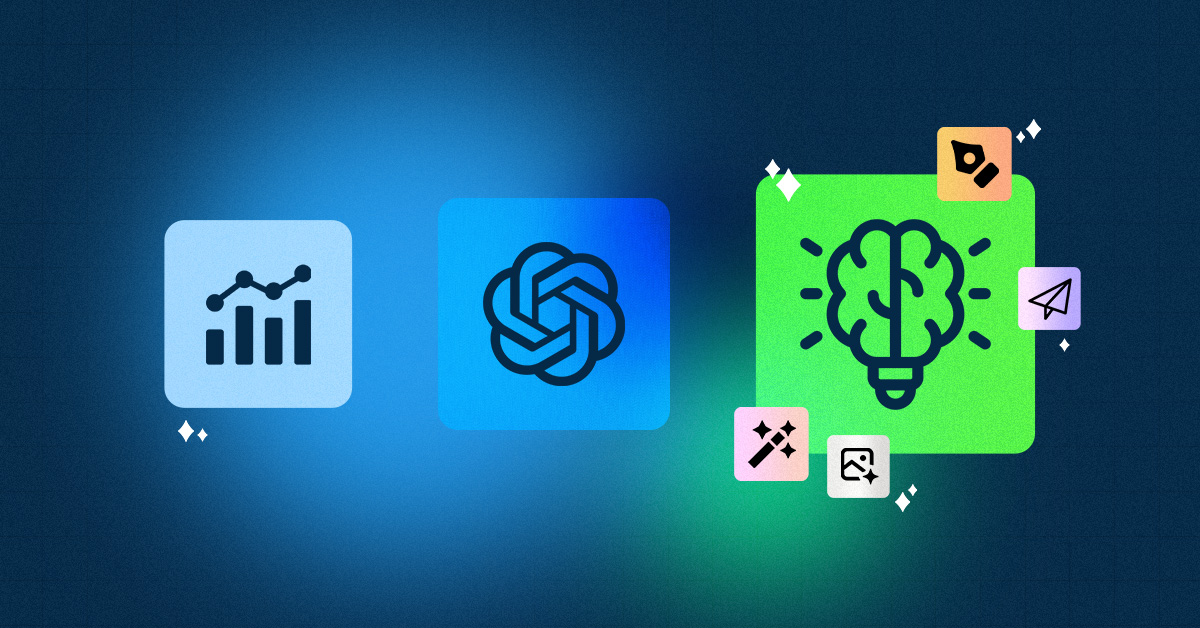
At Response Labs, we've landed on a single principle that shapes every campaign we touch: Data drives. AI supports. Human intelligence decides.
It wasn't written to be a tagline, but a way to keep us honest as AI tools made their way into our process. It's a gut check to make sure we're using them well instead of just using them fast. Let's break down what each part really means, because the order matters more than it may seem.
The Function of a Creative Leader Hasn't Changed. The Toolbox Has.
A creative lead's job has never been "make things look good." The job is translating a strategic brief into work that actually moves someone and moves the needle for the business. That means understanding where someone is in the funnel, what a specific audience needs to feel before they act, and how a piece of creative fits into a much bigger brand story.
AI hasn't changed any of that.
What AI has changed is how fast we can test an idea, iterate on it, and personalize it before it ever reaches someone's screen.
I think about AI the same way I think about any other tool that's already in existence, such as an OS, Figma, Adobe Creative Cloud, etc. Nobody hands you Photoshop and calls the layout "AI-made." It's the same logic here: the software doesn't make the creative decisions. It just means I get to explore more directions before I commit to the one that's actually right.
Show Your Work: The Case for Creative Credibility
When anyone can generate a hundred versions of an ad in a minute, the thing that actually differentiates a brand isn't the output anymore, it's the evidence that someone thought about it. Audiences and clients are getting sharper at spotting the generic, prompt-and-publish stuff. What builds real trust is being able to see the strategy underneath: why this headline, why this color, why this message for this specific audience.
I call this Creative Credibility. Making the process visible, not just the final deliverable. Instead of quickly passing creative off for approval, I want to be able to walk someone through the strategic thread: here's the business objective, here's the data insight behind it, here's the creative decision that came out of it, and here's how we'll know if it worked. That transparency is the difference between being a vendor and being a true partner.
What Data Drives Looks Like
Before opening up any LLM, our process starts with looking at performance data. What's converting? What's fatiguing? Where are people dropping off? Which messaging versions are actually landing with which audience? This is the strategic layer that AI can help us move faster in once we know these things, but it can't tell us those to begin with.
For our team, that means:
- Funnel-stage insight informs creative direction. Someone discovering a brand needs something different than someone deciding between two loyalty tiers.
- Segmentation isn't just swapping in a name field. We're understanding what a distinct regional or cultural audience actually needs to feel connected to a brand.
- Past performance sets the brief. We don't guess what to test next, the data already told us.
How AI Supports
Once the strategic brief is clear, that's when AI becomes genuinely useful. It becomes the tool to move faster through exploration and creative execution.
How we're using AI agents:
- Getting to more ideas, faster. Generating dozens of directional concepts or headline options against a defined strategic brief, so our team can choose the stronger options.
- Scaling localized variation. AI helps produce variations across regions and languages more efficiently but our team is still the one making sure tone and cultural fit actually land.
- Pattern recognition our team can act on. Surfacing what's working across large data sets so we can make faster, better-informed decisions.
AI is great at breadth and speed but it has no idea which concept is actually right for this brand, this audience, this moment. That judgment call is and will always be a human one.
The Part That Doesn't Get Automated: Human Intelligence Decides
Nothing AI-assisted goes out the door at Response Labs without running through human leadership first. That usually means asking:
- Does this actually serve the brand's strategic objective, or does it just look interesting?
- Is this emotionally resonant, or just technically correct?
- Would this build trust with a real person, or does it feel generic?
- Does this hold up against the data and against our brand instincts?
A creative lead's role in an AI-supported workflow isn't to approve whatever AI spits out. It's to direct intent by setting the strategic guardrails an AI agent is working with, deciding what actually makes it through, and applying the kind of emotional intuition that no agent has access to.
Why This Matters for the Business, Not Just the Work
Full-funnel personalization, brand elevation, real engagement — none of that comes from volume alone. It's built from relevance, and relevance is a human judgment call, informed by data, accelerated by AI.
Teams that are letting AI decide end up with fast, forgettable, interchangeable work. Teams that ignore AI entirely can't move at the speed omnichannel campaigns demand anymore. The advantage is in the blend: strategic human leadership, applying what the data's telling us to prompt AI well, then curating and refining what comes back into creative that's actually built to convert and built to be trusted.
Where This Takes Us
I don't see AI as a threat to the creative industry. If anything, it's made the case for creative leadership stronger. When anyone can generate anything instantly, the ability to know what's actually right becomes the competitive advantage.
At Response Labs, that's the workflow we've built: data-informed, AI-accelerated, human-decided. AI tools are going to keep changing and probably faster than any of us can fully keep up with. But the principle underneath it isn't going anywhere. Data will keep driving. AI will keep supporting. And human intelligence — judgment, instinct, the emotional read on what actually connects — will keep deciding.